01 · Context and goal
The creator of an educational YouTube channel came to us. His audience was already used to learning from his content, and he needed to give them a memorization tool — flashcards with words, concepts and facts. But not “yet another app you have to install from a store”: something that opens in one tap right inside Telegram, where the audience already spends its time.
The goal: a Telegram Mini App for studying flashcards. Users practice with swipes; every card has an image and, optionally, voice-over. The content creator prepares “signature” decks, and users can build their own. Monetization is a subscription right inside Telegram, with no redirects to external payment pages.
02 · What was hard
- A Telegram Mini App is not “a website in a browser.” It has its own authentication (through Telegram, no logins or passwords), its own lifecycle, its own theme, WebView limitations on iOS and Android, and native close gestures. All of this has to be handled, or the app “breaks” specifically inside Telegram while looking fine in a regular browser.
- Payments inside Telegram. Payments go through Telegram Stars and the TON cryptocurrency — this isn't Stripe or YooKassa (a Russian payment provider) with ready-made SDKs. The invoice, the payment confirmation from Telegram, subscription activation and its expiry all have to be handled correctly — with no chance that a user pays and access doesn't unlock.
- Voice-over without going broke. ElevenLabs TTS charges for every generation. Re-voicing the same word every time a card opens is wasteful. The audio has to be cached and stored so it's served fast and never regenerated.
- Free and paying users in one system. FREE users have limits (2 decks, a cap on cards per practice session, a daily swipe limit); PREMIUM has none. The limits have to be enforced properly on the backend, not left to the frontend's good faith.
A Mini App wins where a regular app loses: zero friction. The user doesn't go to a store, doesn't download anything, doesn't sign up — they're already inside.
03 · Solutions
Card = image + mnemonic + voice-over
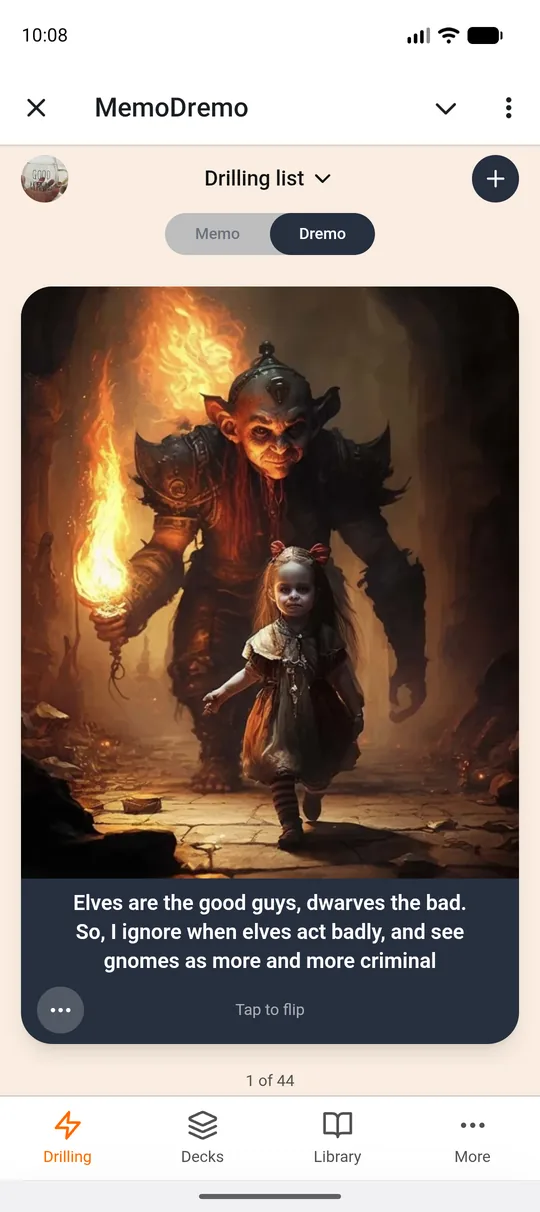
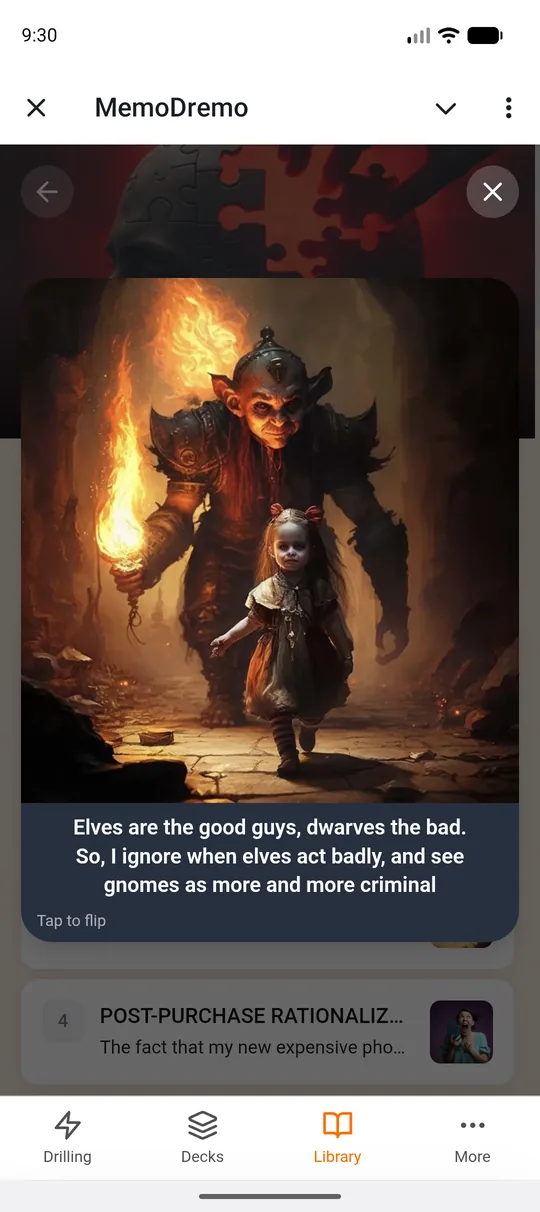
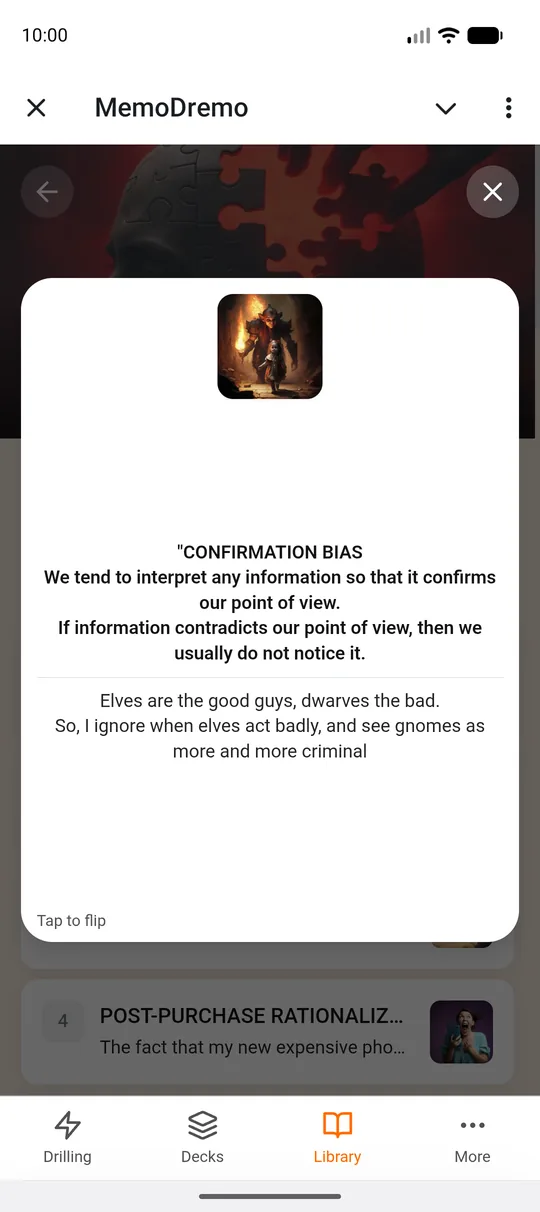
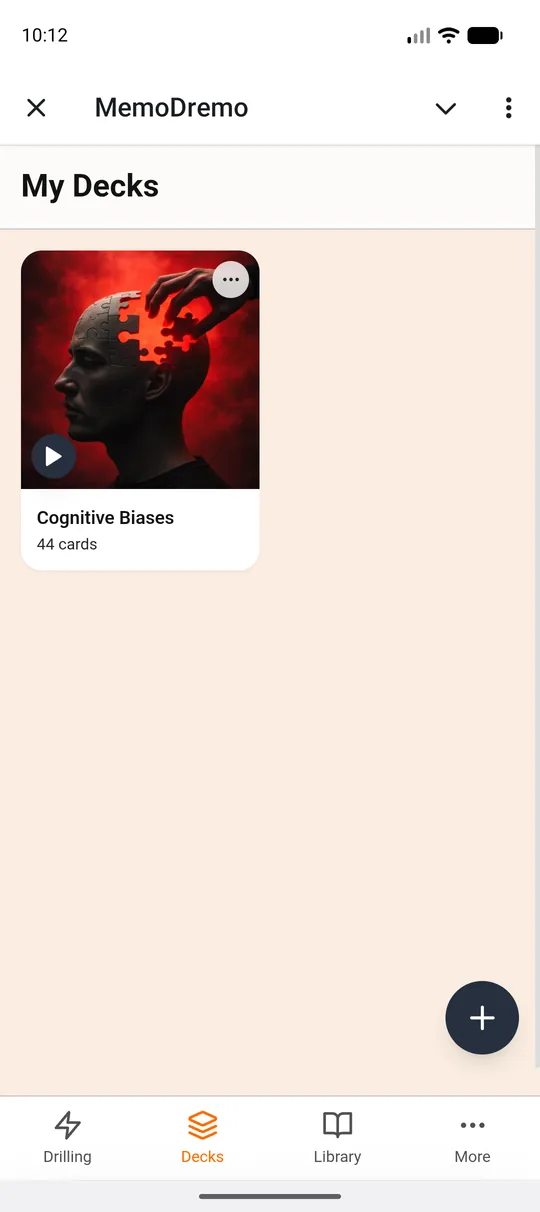
Every card is two-sided: the front holds an image and an association to help you remember, the back holds the definition. Images are generated to match the meaning of the card rather than picked at random — that's the mnemonic method: you remember through a vivid image. Either side can be voiced.
Swipe practice with queue control
In Drilling mode, cards come one after another. Swipe down for “I know it,” and the card moves further back in the queue. Swipe up for “back to the start” to see it again soon. It's a simplified form of spaced repetition: what you remember poorly comes up more often. Cards are never removed, so practice is endless.
Payments in Telegram Stars and TON
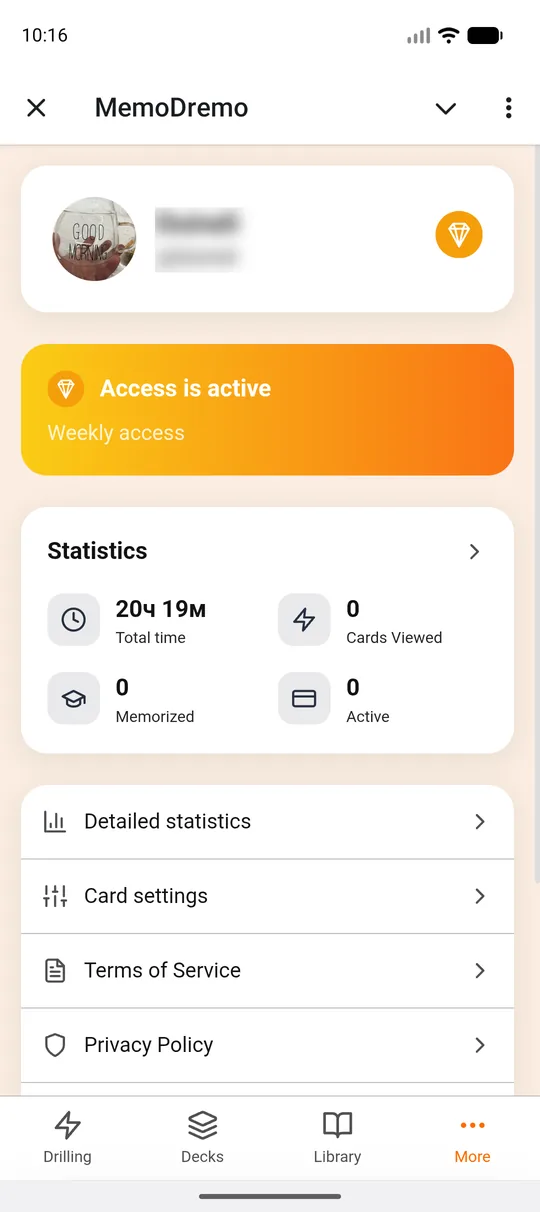
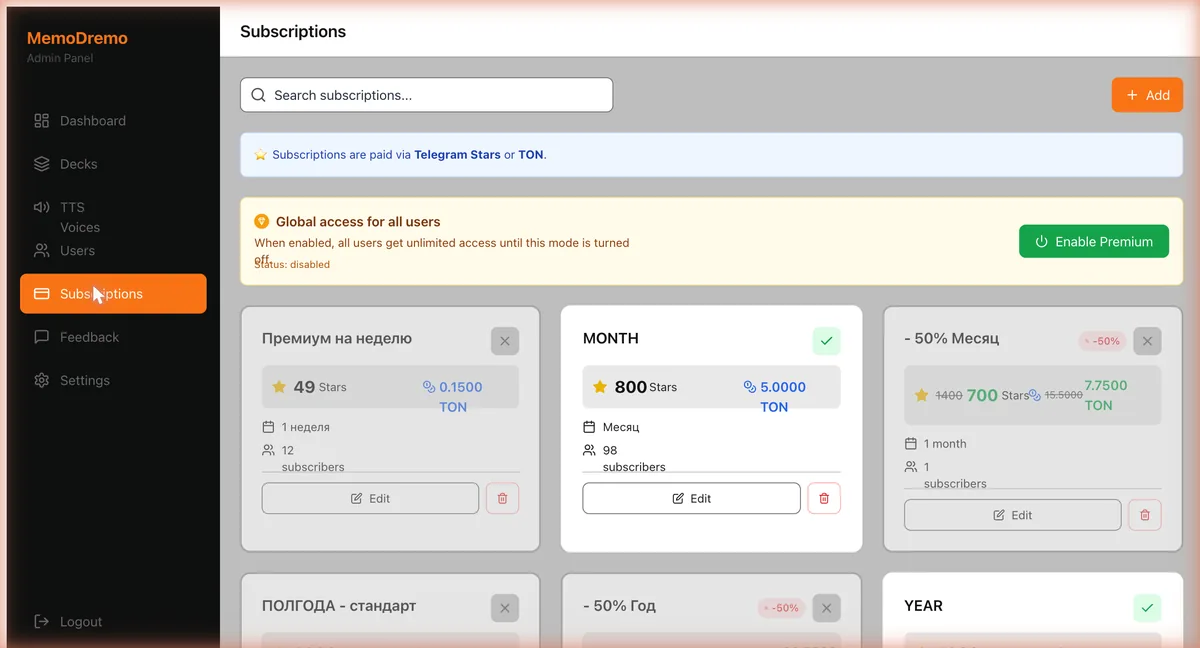
Subscriptions are purchased right inside Telegram. There are several plans — a week, a month, six months, a year — plus promotional plans at 50% off. Prices are shown in both Telegram Stars and TON, and payment happens without leaving the messenger. Once Telegram confirms the payment, access unlocks automatically.
Multilingual voice-over via ElevenLabs, with caching
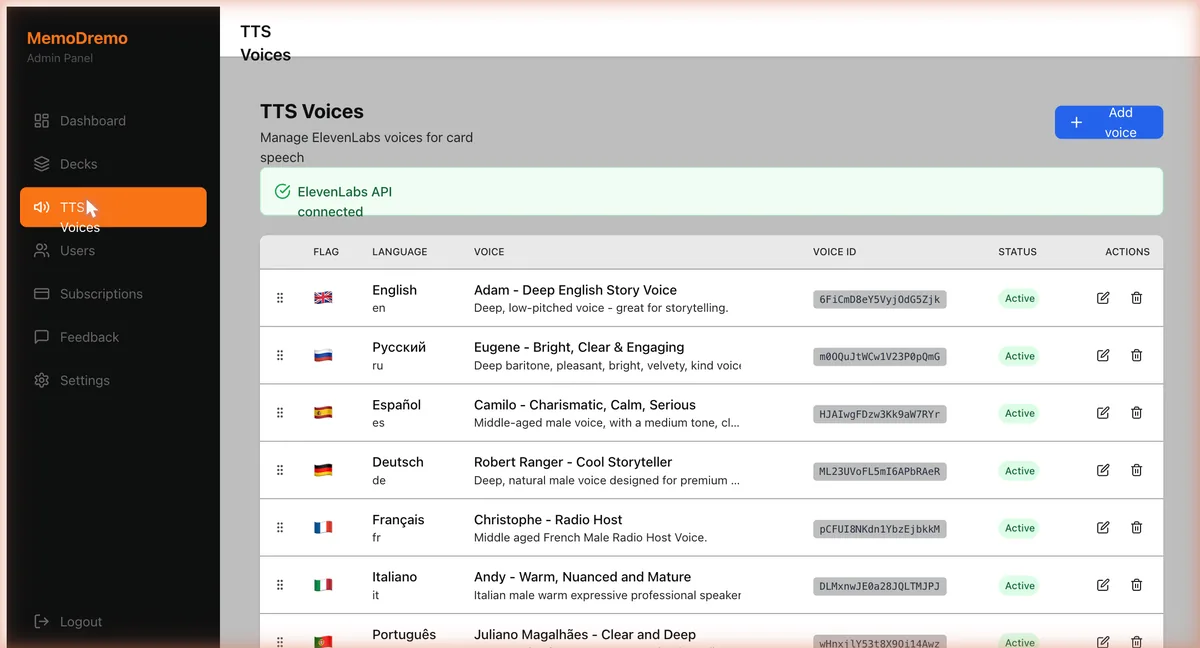
Cards are voiced through ElevenLabs, with a separate voice for each language (English, Russian, Spanish, German, French, Italian, Portuguese and more). Generated audio is cached and kept in S3-compatible storage, so voicing the same text again costs neither ElevenLabs quota nor the user's time.
Library and user decks
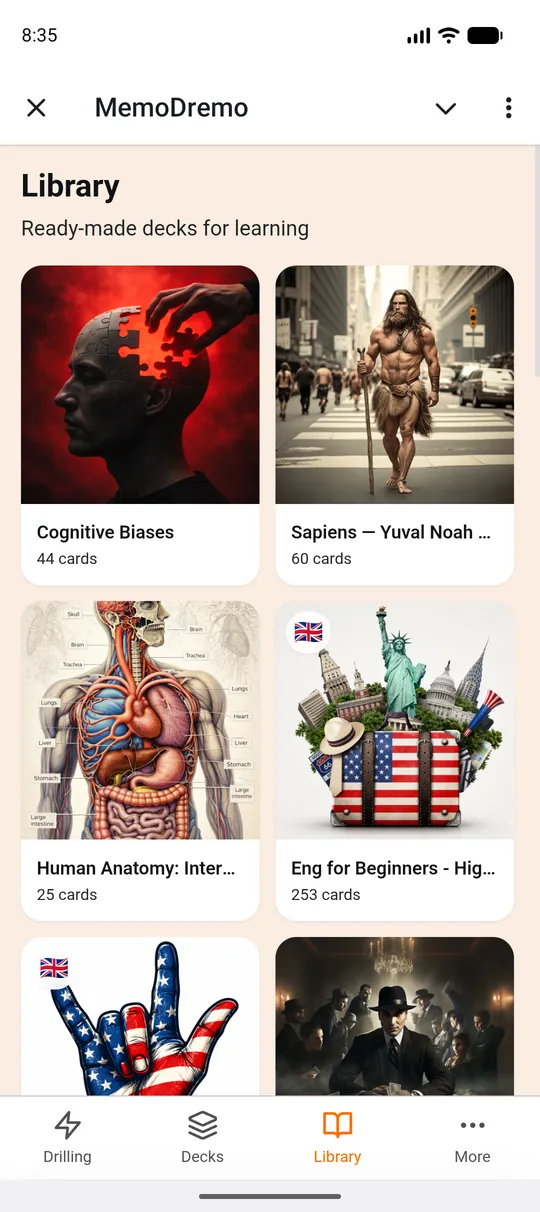
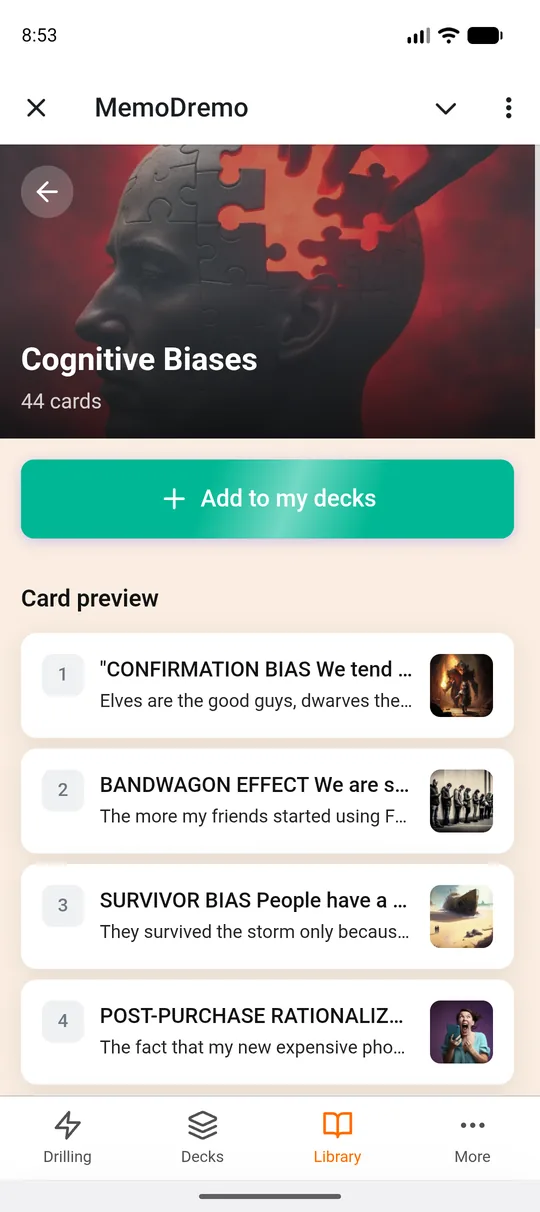
The content creator prepares public decks, which sit in the library with their own covers. Any of them can be copied with one tap to start practicing. Users can also build their own decks. FREE limits (number of decks, cards per practice session, swipes per day) are enforced on the Laravel backend — the frontend can't get around them.
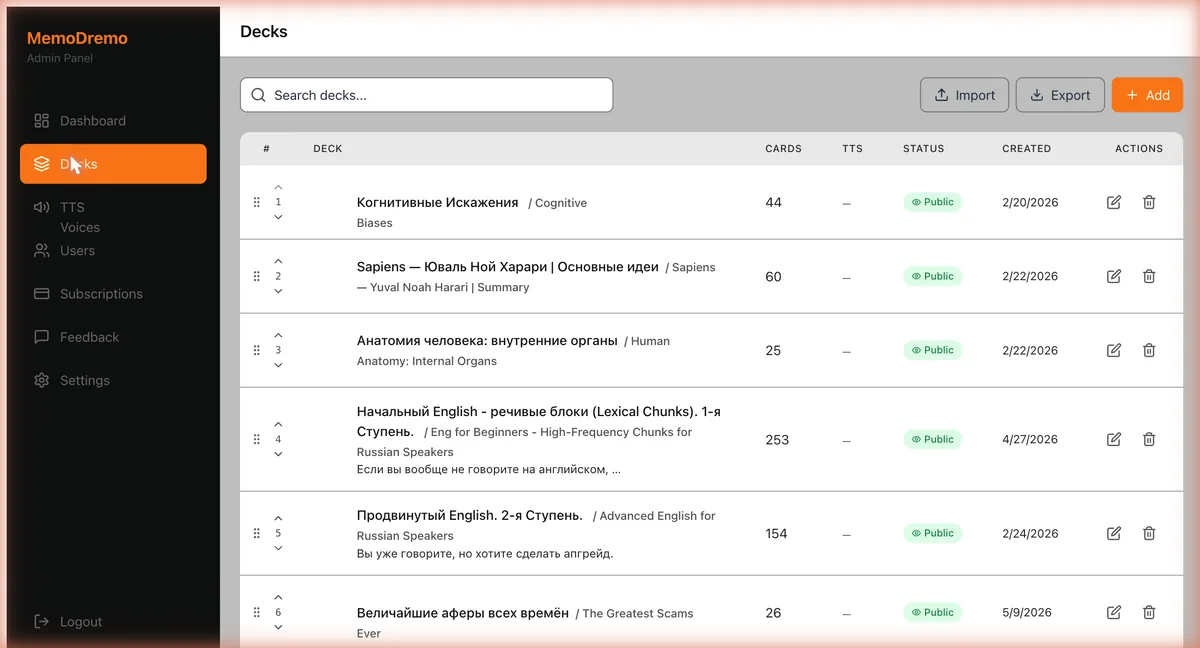
Admin panel for the content creator
A separate web admin panel: a dashboard with metrics, deck and card management (with import/export and drag-and-drop sorting), TTS voice and plan settings, users and feedback. The creator manages content on his own, without going to the developers.
04 · Results
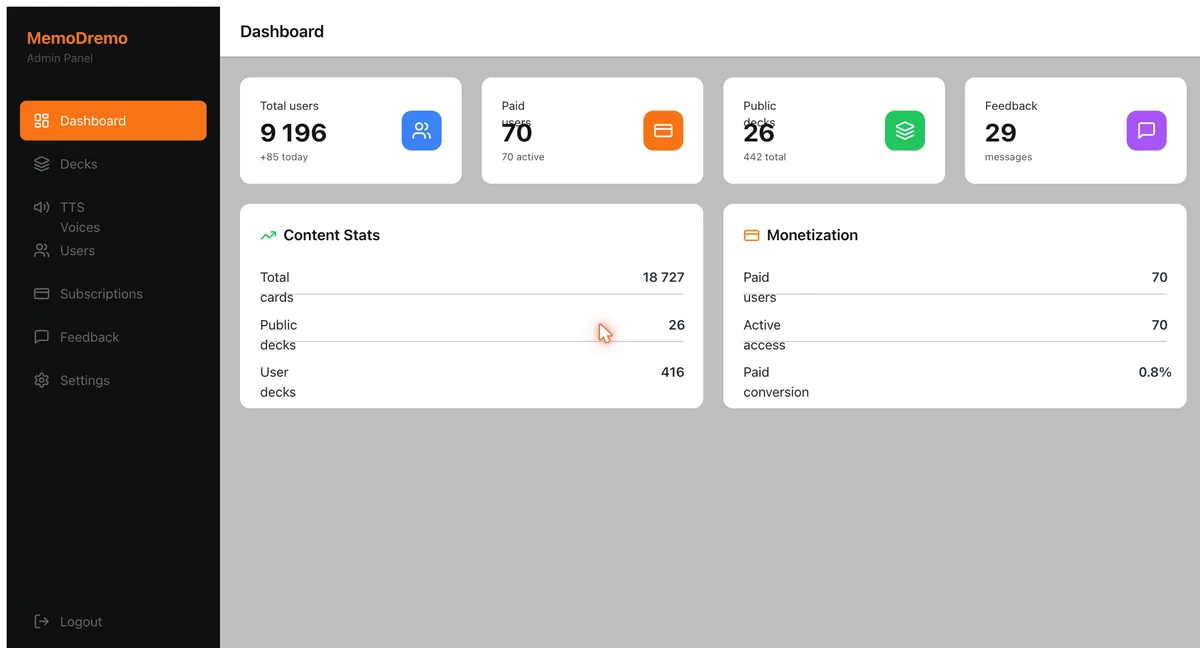
The app has been running stably in production for several months. More than nine thousand users, a library of the creator's public decks and thousands of user-made cards. A subscription takes a couple of taps right in Telegram — no redirects to external payment pages.
The content creator runs the project entirely through the admin panel: he adds decks, configures voice-over and plans, and sees metrics and feedback. Our part is support, development and stability.
05 · What's next
The project is alive and evolves in iterations: new practice formats, a better repetition algorithm, a growing deck library, new voice-over languages. The Mini App updates without going through the app stores — we deploy to the server, and every user gets the new version right away.
The infrastructure is Laravel + MySQL + Redis in Docker, with React on the frontend. Adding a new deck, voice or plan doesn't require an app release — the content creator manages all of it from the admin panel.