01 · Context and goal
A gardener spots strange patches on the cucumber leaves — is it a disease or a lack of fertilizer? Until now, people looked for answers on forums and in social media groups, mostly guessing. The idea behind the project was to give gardeners a pocket plant expert: take a photo of the plant, get a diagnosis and a clear action plan.
The goal: a mobile app that identifies plants and their diseases from a photo, keeps a personal care calendar with reminders, and offers quick advice through an AI chat, with the option to call in a live specialist. Plus a reason to keep coming back: a plant collection and achievements.
02 · What was hard
- Recognizing plants and diseases from a photo. This isn't a filter or a CRUD screen — the photo goes to a neural network that has to identify both the plant species and the problem (disease, pest, nutrient deficiency). The app has to handle slow model responses, timeouts and low-confidence results gracefully.
- A hybrid chat: AI + a live operator. The AI answers first. But if the question is tricky, the user calls in an operator, who joins the same conversation in real time. When the operator is done, the chat goes back to the AI. That takes real-time WebSocket messaging with careful state handling: who's answering right now, typing indicators, reconnecting when the network drops.
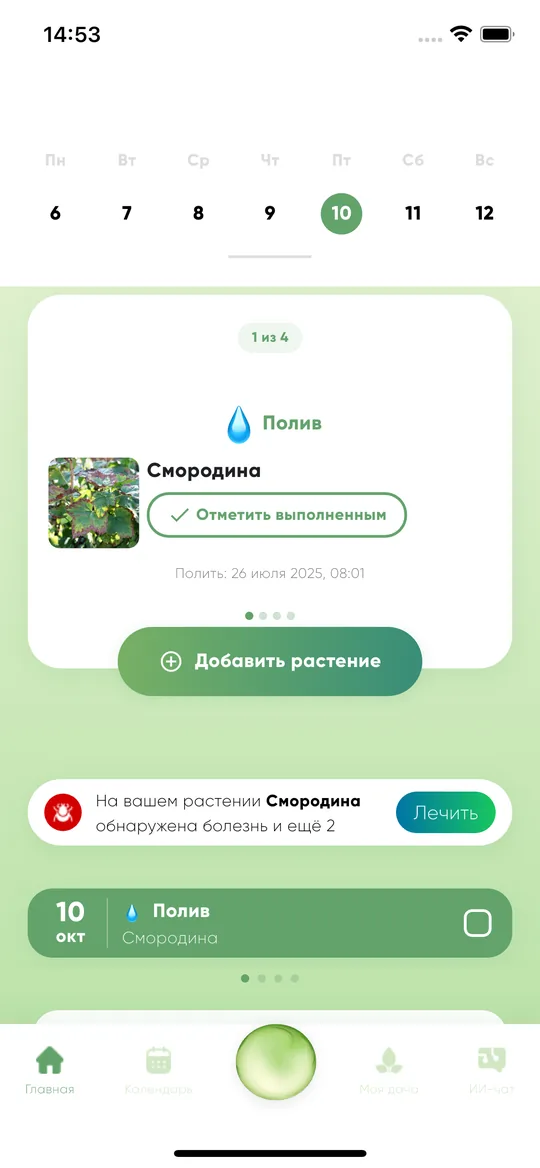
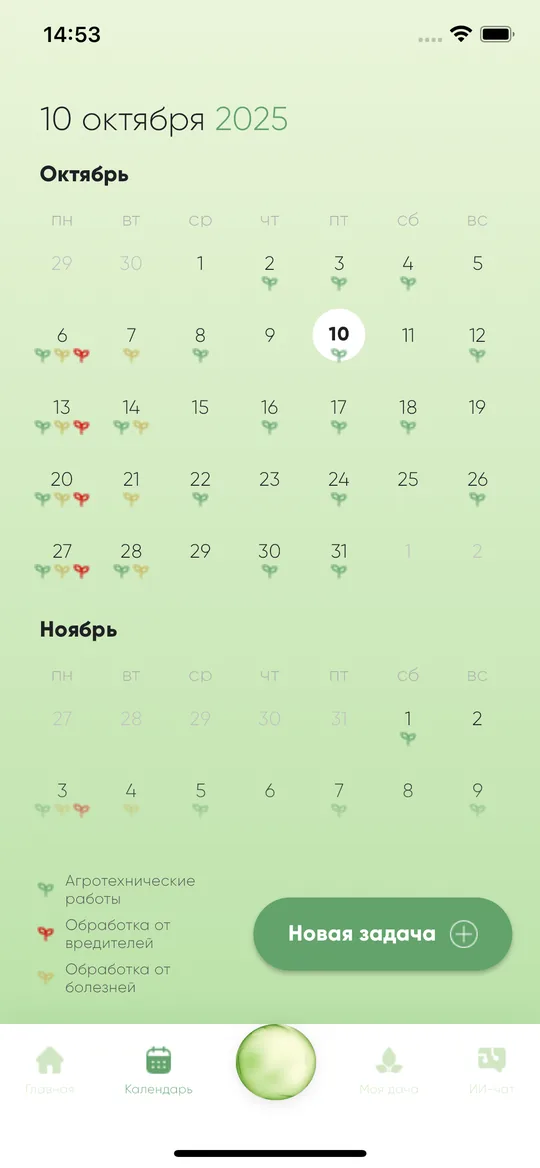
- A personal care calendar. Every plant has its own schedule: watering, fertilizing, pest and disease treatment. Reminders are built individually, and users can mark tasks as done or make exceptions (skip a day). It's real scheduling logic, not just a to-do list.
- Three app stores, two platforms. The app is published on RuStore (Russia's Android app store), the App Store and Google Play. Each has its own requirements for builds, signing, screenshots and review rules. On top of that, sign-in via SMS, Google and Apple — each with its own quirks per platform.
The value isn't in showing a pretty plant card — it's in giving the gardener the right answer to their specific problem, and reminding them in time that it's time to act.
03 · Solutions
Photo → neural network → care plan
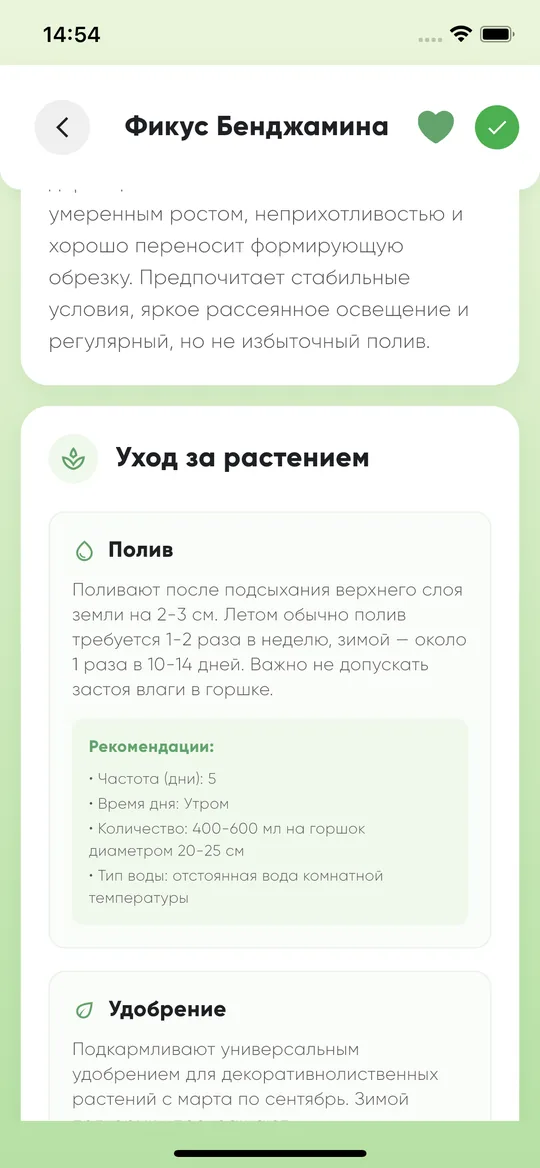
The user takes a photo of a plant, and the image goes to the backend and on to the recognition model. What comes back: the plant species, any problems found (diseases, pests) and specific care recommendations — watering (frequency, time of day, amount, type of water), fertilizing, treatment. The plant is saved to "My Dacha" with a personal plan.
A calendar with tasks by type
The care calendar is built from the plants in the user's collection. Tasks are grouped by type — general gardening work, pest treatment, disease treatment — and placed on dates. Users see what needs doing and when, mark tasks as done and can add their own.
AI chat with handoff to an operator
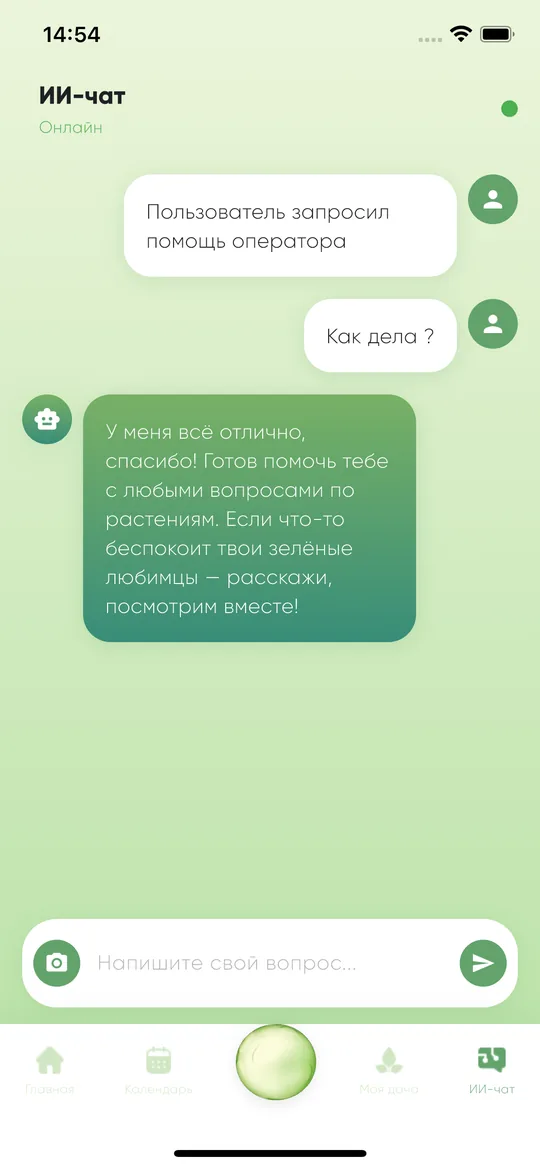
The chat answers care questions instantly using AI. If a person is needed, one tap brings a live operator into the same conversation, and the exchange happens in real time over WebSocket. After the consultation, the chat goes back to the AI. Quick questions get resolved automatically and hard ones by a specialist — without switching to another app.
Collection, achievements and authenticity checks
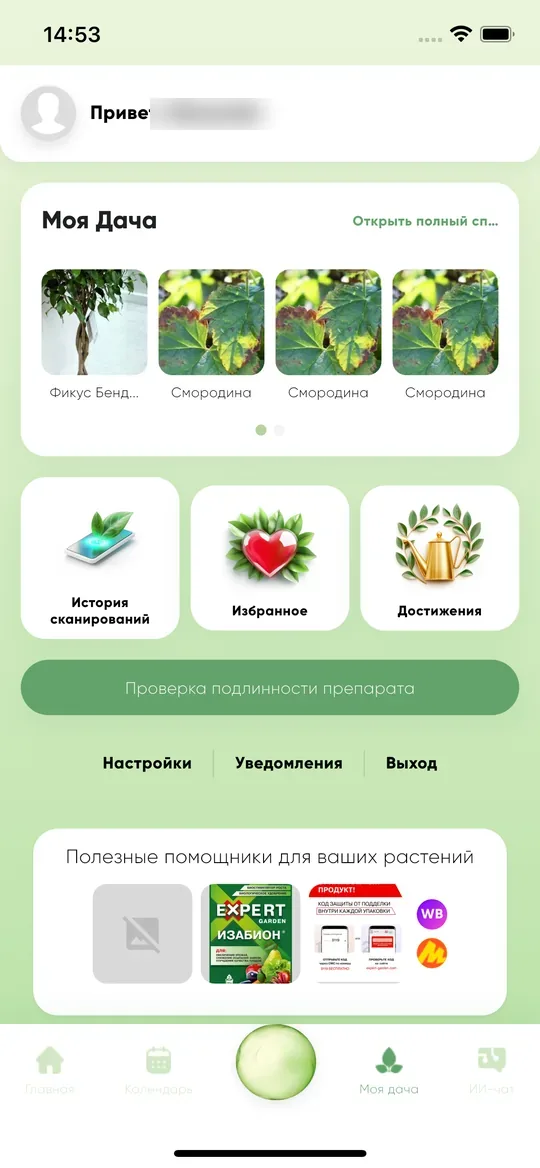
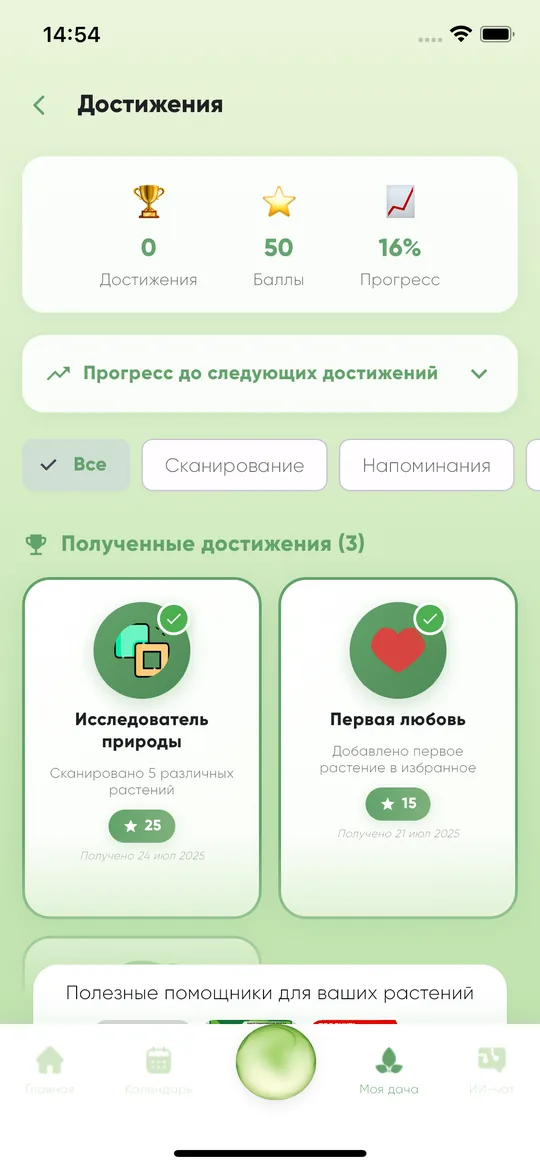
"My Dacha" is the user's plant collection, with scan history and favorites. Achievements encourage people to come back and care for their plants regularly: points, progress, and rewards for scanning different plants and adding a first favorite. A separate feature checks the authenticity of garden products, helping people avoid buying counterfeit garden chemicals.
Sign-in and cross-platform
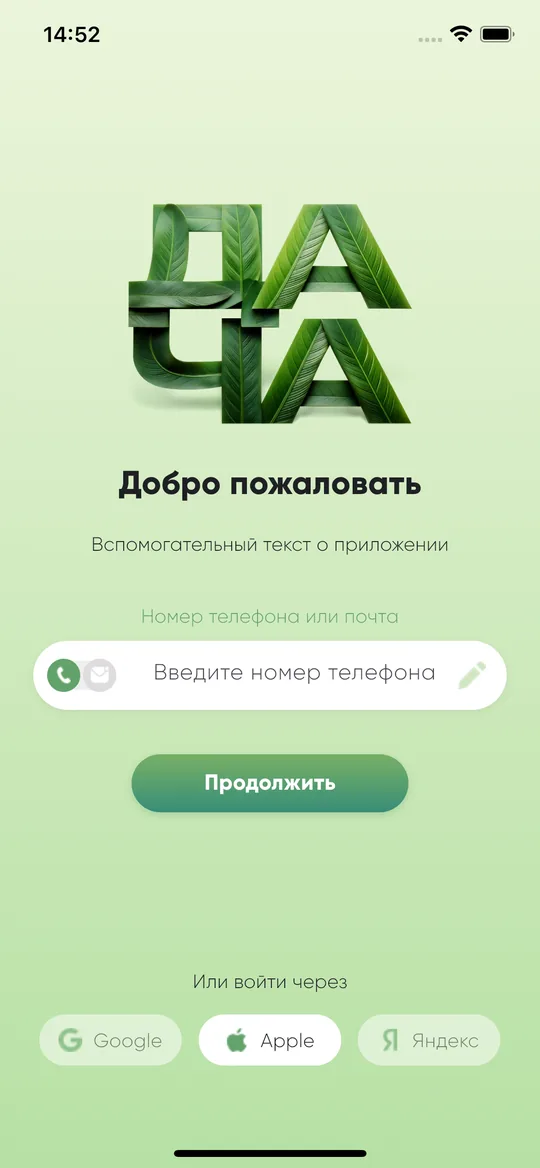
Sign in with SMS, Google or Apple ID, with region selection at startup. A single Flutter codebase builds for both iOS and Android, with authentication through Firebase. The app passed review and is published on all three major app stores.
04 · Result
The app is in production and published on three app stores — RuStore, the App Store and Google Play. Gardeners photograph a plant, get a diagnosis and a care plan, keep a calendar and ask the AI or an operator. At version 1.2.4, the product has gone through several rounds of updates and improvements based on user feedback.
The combination of photo recognition, a personal calendar and a hybrid AI chat covers the gardener's whole journey: from "what's wrong with my plant?" to "when and with what should I treat it?"
05 · What's next
The product keeps growing: a larger database of plants and diseases, better recognition quality, new task types in the calendar and more gamification. Mobile updates ship regularly — version 1.2.4 is far from the first release.
The architecture (Flutter client + Node backend + Firebase + WebSocket chat) makes it possible to add features without rewriting the system: a new notification type, a new chat scenario or a new section in "My Dacha" is an extension, not a rebuild.